



Is Tallow Safe for Babies? A Parent's Guide to Tallow Balm
When you are caring for a baby, you read every label twice. So it is completely natural to ask, before putting anything on that soft new skin: is tallow safe for babies? This is a gentle, honest guide for parents, covering why so many families choose tallow, how to use it safely, what to watch for, and when to check with your pediatrician.
A note first: this article is general information, not medical advice. Babies' skin is delicate and every child is different. Always patch test, and talk to your pediatrician before using any new product on your baby, especially for a rash, a skin condition, or a newborn.
Why parents reach for tallow
Long before commercial baby lotions existed, rendered animal fat was what mothers reached for to soothe dry skin and chapped little cheeks. Parents are coming back to tallow for the same reasons their great-grandmothers used it, and those reasons are exactly what you want for baby skin.
1. A short, simple ingredient list
This is the big one for babies. Many baby lotions contain fragrances, preservatives, and other additives, and those extras are often what irritates delicate skin. A clean tallow balm is just a few recognizable ingredients, so there is very little for a baby's skin to react to. Simplicity is safety here.
2. It is close to skin's own oils
Tallow's fatty-acid profile is similar to human sebum and, interestingly, to some of the fats naturally found in breast milk. Because it is so close to what skin already knows, it tends to absorb gently and be well tolerated.
3. Gentle, effective moisture
Baby skin can dry out quickly. Tallow is a rich fat that soothes and seals in moisture, which is why parents reach for it for dry patches and rough spots.
Common ways parents use tallow on babies
With a patch test done and your pediatrician's okay, families commonly use a tiny amount of unscented tallow balm for:
- Dry patches on cheeks, arms, legs, and body.
- Cradle cap, the flaky, scaly patches on a baby's scalp. A small amount can help soften the flakes.
- Diaper area, as a gentle, simple barrier balm for everyday dryness and mild irritation.
- Rough or chapped spots from weather or drool.
Use only a very small amount, warmed between your fingers, and apply gently. A little goes a long way on tiny skin.
How to use tallow on your baby safely
- Choose unscented. For babies, always use a completely fragrance-free tallow balm. Skip essential oils, which can be too strong for infant skin.
- Patch test first. Apply a small amount to a small area, like the inner arm, and wait 24 hours. Watch for any redness, bumps, or irritation before using it more widely.
- Use clean hands and a little product. Warm a small amount between clean fingers and press it gently into the skin. Do not introduce water into the jar.
- Avoid the eyes and mouth and any broken, weeping, or infected skin.
- Talk to your pediatrician, especially for newborns, for any rash or skin condition, or if your baby has known allergies.
Is there any allergy risk?
A true beef or red-meat allergy is rare, but it exists. If your family has a history of it, or if your baby has significant food allergies, check with your pediatrician before using tallow, and be especially diligent with the patch test. For most babies, a simple, clean, unscented tallow balm is very well tolerated, but a patch test is always the responsible first step.
What tallow can and cannot do for baby skin
Tallow is lovely everyday care: it soothes and moisturizes dry patches, softens cradle-cap flakes, and offers a simple diaper-area barrier, all with very few ingredients. What it is not is a medicine. It will not treat an infection, and it is not a cure for eczema, severe diaper rash, or any medical skin condition. If your baby has a rash that is spreading, weeping, blistering, or not improving, that is a call to your pediatrician, not a job for a balm.
Why quality matters even more for babies
The same care that makes tallow good for adult sensitive skin makes it right for babies: 100 percent grass-fed sourcing for a cleaner, more nutrient-rich fat, small-batch hand-rendering for a pure and mild balm, and a fragrance-free formula with nothing extra. Cheap, heavily processed, or scented "tallow" products are not what you want near infant skin. When it comes to babies, the shortest, cleanest ingredient list wins.
Why baby skin needs extra gentleness
To understand why simplicity matters so much for babies, it helps to know how different their skin is from ours. A baby's skin is thinner than an adult's, its protective barrier is still developing, and it loses moisture more easily. It is also more permeable, meaning it absorbs what is applied to it more readily than adult skin does. That combination, thin, developing, absorbent, is exactly why parents are right to be cautious about ingredients, and why a short, clean ingredient list is genuinely safer rather than just marketing.
It is also why fragrance-free is not optional for infants. Synthetic and even natural fragrances are among the most common causes of skin reactions, and a baby's developing skin is less equipped to handle them. When you strip a product down to a few recognizable ingredients with no added scent, you remove most of what could bother that delicate skin in the first place. Simplicity is the safety feature.
This is also why the same product can suit a whole family. The qualities that make a clean, unscented balm gentle enough for a baby, a short ingredient list, no fragrance, and a fat that mirrors the skin's own oils, are exactly the qualities that make it comfortable for adults with sensitive skin too. The difference is only in how much you use and how carefully you introduce it, which is why the patch test and your pediatrician's guidance matter so much more for the youngest members of the household.
How to patch test on a baby, properly
Patch testing is the most important safety step, and it is worth doing carefully. Choose a small, discreet area such as the inner forearm or the back of the calf. Apply a very small amount of the unscented balm and leave it uncovered. Wait a full 24 hours, and watch for any redness, bumps, swelling, warmth, or signs of irritation in that spot. If the skin stays calm, that is a good sign you can try it on a slightly larger area. If you see any reaction, stop, wash the area gently, and check with your pediatrician before trying it again. When in doubt, go slower rather than faster. There is no rush, and your caution is exactly right.
A gentle approach to common baby skin situations
Here is how tallow tends to fit into the everyday skin situations parents encounter, always alongside a patch test and your pediatrician's guidance.
Everyday dryness
Babies' skin can dry out from baths, weather, and drool. A tiny amount of unscented balm on dry cheeks, arms, or legs after a warm (not hot) bath, applied to slightly damp skin, helps soothe and seal in moisture.
Cradle cap
Those flaky, scaly patches on the scalp are common and usually harmless. A small amount of balm can help soften the flakes so they lift gently; never pick or scrub. If cradle cap is widespread or you are unsure, ask your pediatrician.
Diaper area
As a simple, everyday barrier for mild dryness and irritation, a thin layer of unscented balm can help. For anything beyond mild, redness that is spreading, raw, blistered, or not improving, that is a diaper rash to show your pediatrician, not to self-treat.
Weather-chapped skin
Cold, wind, and sun can chap little cheeks and lips. A dab of balm offers gentle protection and comfort.
When to call the pediatrician instead
Because we are talking about babies, it is worth being very clear about the limits. A balm is for everyday comfort and mild dryness. It is not a treatment for a medical problem. Call your pediatrician, rather than reaching for a balm, if your baby has a rash that is spreading, weeping, blistering, or looks infected; a fever alongside a skin problem; any rash on a newborn; signs of an allergic reaction; or any skin issue that is not improving or that worries you. Trust your instincts. Parents are usually the first to notice when something is not right, and no product is a substitute for a professional when your baby needs one.
Why quality matters most of all for babies
Everything that makes tallow good for adult sensitive skin matters even more for infants, because their skin is more delicate and absorbent. That means the sourcing and processing are not just quality niceties; they are safety considerations. Look for 100 percent grass-fed tallow for a cleaner, more nutrient-rich fat, small-batch hand-rendering for purity, and a genuinely fragrance-free formula with the shortest possible ingredient list. Avoid anything with added fragrance, unknown fillers, or a long list of ingredients you cannot identify. For a baby, the simplest, cleanest, most transparent product is the right one, every time.
What pediatricians generally recommend for baby skin
The mainstream guidance on infant skin is reassuringly simple, and a good tallow balm fits comfortably within it. Pediatric dermatology consistently favors fragrance-free, minimal-ingredient products, because added scents and long ingredient lists are the most common sources of irritation on delicate skin. The advice is to bathe babies in warm rather than hot water, keep baths short, and moisturize soon afterward to lock in hydration, which is precisely when a thin layer of unscented balm does its best work. Experts also stress patch testing anything new and introducing one product at a time, so that if a reaction does occur you know exactly what caused it. None of this is unique to tallow; it is the standard of gentle infant care, and it happens to describe how a simple, clean balm should be used. When a product aligns with that cautious, minimal philosophy, it tends to be a sensible choice, always with your own pediatrician's blessing.
Frequently asked questions about tallow and babies
At what age can I use tallow on my baby?
Newborn skin is especially delicate, and many pediatricians advise keeping products to an absolute minimum in the first weeks. For any age, the right move is to ask your pediatrician before applying something new and to patch test first. There is no universal age answer, which is exactly why professional guidance for your specific child matters.
Is tallow safe if my baby has sensitive or eczema-prone skin?
A fragrance-free, single-ingredient balm removes many common triggers, which is why some parents of sensitive babies find it gentle. But eczema-prone infant skin can react unpredictably, and eczema is a medical condition, so this is a conversation to have with your pediatrician rather than a decision to make alone.
Can I use tallow balm on my baby's face?
A tiny amount on dry cheeks can help, applied carefully and kept well away from the eyes and mouth. As always, patch test first and start with the smallest amount. If your baby tends to bring hands and everything else to the mouth, keep application light and thin.
What if my baby has a reaction?
Stop using it immediately, gently wash the area with warm water, and contact your pediatrician if the reaction is anything beyond very mild or does not settle quickly. Note what you applied and when, which helps your doctor sort out the cause.
Can I use tallow balm on diaper rash?
As a simple barrier for very mild dryness and everyday protection, a thin layer can help. But a true diaper rash, one that is red and spreading, raw, blistered, or not improving, is a medical issue, not something to self-treat with a general balm. Show anything beyond the mildest irritation to your pediatrician, who may recommend a dedicated barrier or medicated product.
Is tallow safe if my baby puts their hands in their mouth?
Tallow is a food-grade animal fat, so trace amounts are not toxic, but you still want to apply it thinly and keep it away from the immediate mouth area, and avoid heavy application on hands a baby constantly mouths. When in doubt, apply less and to areas less likely to be licked, and ask your pediatrician.
How is baby skin different from adult skin?
A baby's skin is thinner, more permeable, and has a still-developing barrier, so it absorbs what is applied more readily and loses moisture faster. That is exactly why fragrance-free, minimal-ingredient products and careful patch testing matter so much more for infants than for adults.
Can I use tallow on my child's cradle cap?
A small amount can help soften the flaky scales so they lift gently during a bath, but never pick or scrub at them. If cradle cap is widespread, inflamed, or you are unsure, check with your pediatrician before treating it at home.
What should I avoid in baby skincare products?
Added fragrance is the biggest thing to avoid, along with long ingredient lists, unknown fillers, dyes, and anything you cannot identify. The safest infant products are short, clean, and unscented, which is why simplicity is treated as a feature rather than a limitation.
Can I use the same balm on myself and my baby?
A fragrance-free, single-ingredient balm is often used across the whole family, which is part of its appeal for parents who want one simple product. The important caveat is that your baby still needs their own patch test and, ideally, your pediatrician's sign-off, since infant skin is far more delicate than yours and can react to things that never bother an adult. Sharing a jar is fine; skipping the caution is not.
Can I use tallow balm for cradle cap?
Many parents use a small amount of unscented tallow balm to gently soften cradle-cap flakes. Patch test first and speak with your pediatrician if it is persistent or severe.
Is tallow safe for the diaper area?
A small amount of unscented tallow balm can serve as a simple everyday barrier for dryness and mild irritation. For significant or persistent diaper rash, see your pediatrician.
Should I use scented or unscented tallow for my baby?
Always unscented. Skip essential oils and fragrances, which can be too strong for infant skin.
How much tallow should I use on a baby?
Only a very small amount, warmed between clean fingers and pressed in gently. A little goes a long way on tiny skin.
How White Sparrow makes a balm gentle enough for the whole family
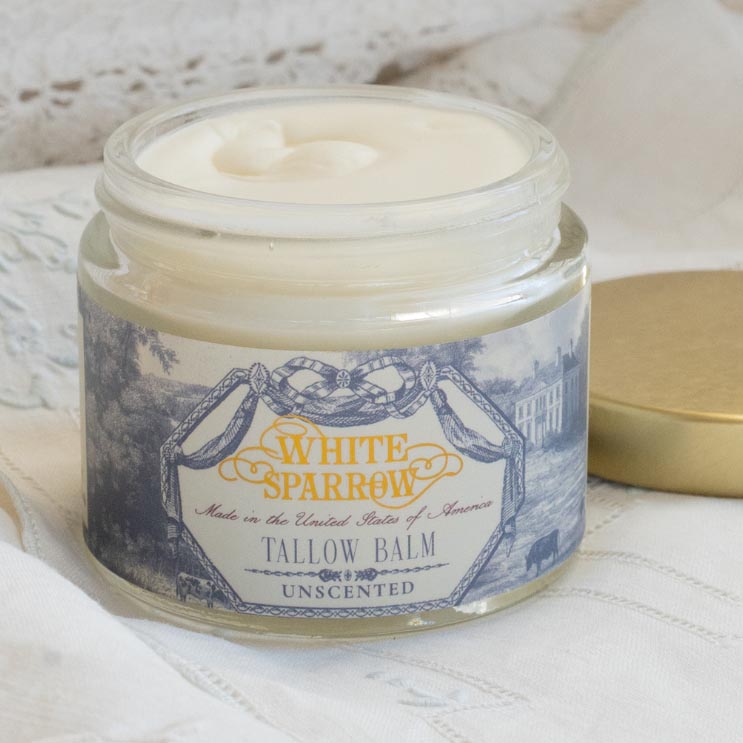
Our unscented tallow balm is made from 100 percent grass-fed, grass-finished tallow, hand-rendered in small batches at our family's 1884 general store in Middleton, Idaho, with a short, clean ingredient list and no added fragrance. Many of our customers use it for the whole family, from parents' dry hands to babies' dry patches, after a patch test and a word with their pediatrician. Every jar comes with a 30-day money-back guarantee.
→ Shop our unscented tallow balm
→ Related: Is beef tallow safe to put on your skin?
White Sparrow Farmacy hand-renders grass-fed tallow skincare in small batches in Middleton, Idaho. This article is general information, not medical advice. Always patch test and consult your pediatrician before using a new product on your baby.