



Beef Tallow for Skin: Benefits, Uses, and How to Choose
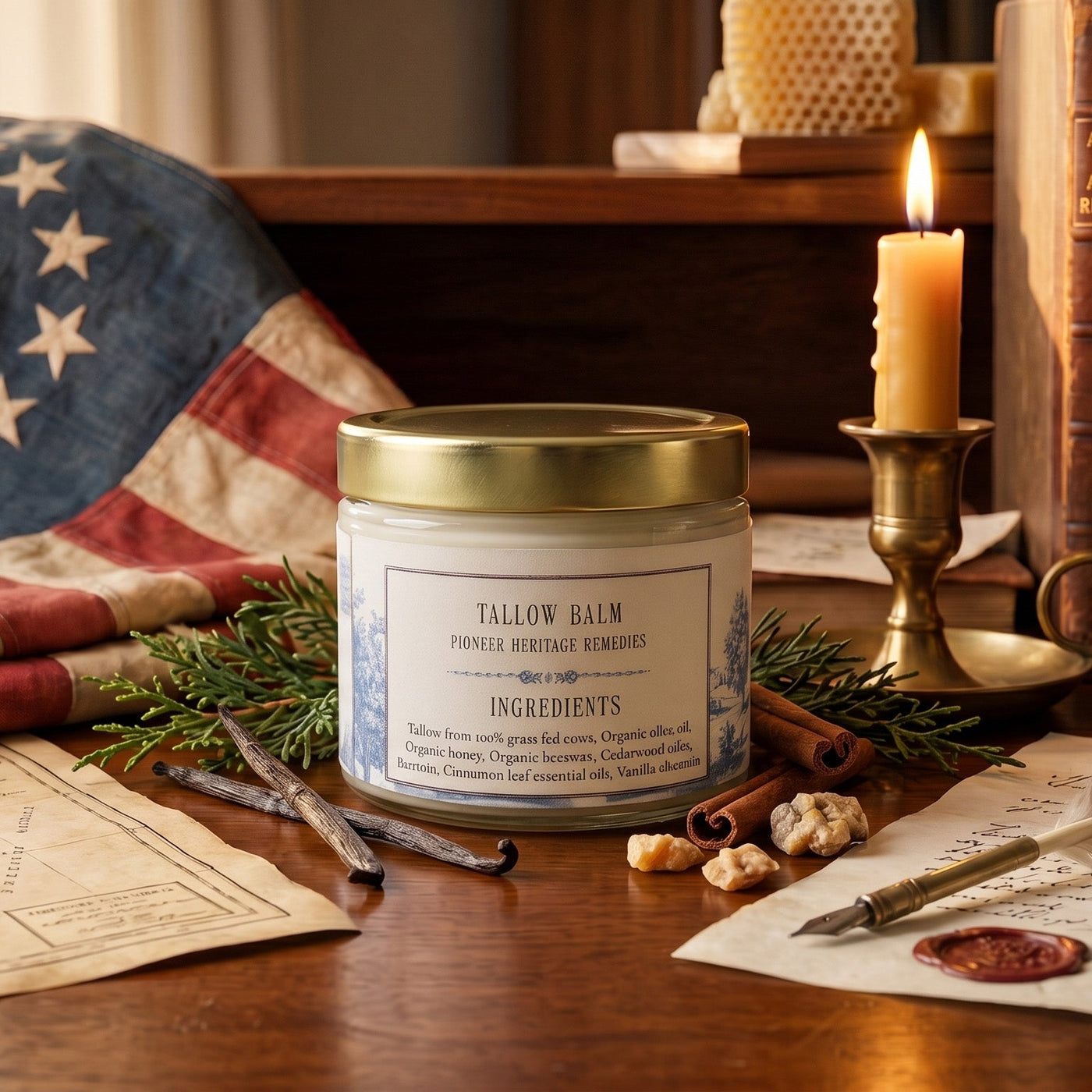
Beef tallow is having a moment, but it's really a comeback. Long before drugstore shelves filled with tubes and pumps, rendered beef fat was one of the most common skincare ingredients in the world. Our great-grandparents kept a crock of it in the kitchen and reached for it to soothe weathered hands, chapped lips, and children's cheeks. Today, people rediscovering it are asking the obvious questions: what does beef tallow actually do for skin, how do you use it, and how do you pick a good one? Here's the complete answer.
What is beef tallow?
Beef tallow is rendered beef fat, most often the clean, stable fat from around the kidneys (called suet). Rendering means gently melting and straining the fat until you're left with a smooth, creamy, shelf-stable substance. That's it. No lab, no long ingredient list. When it's rendered slowly and carefully from good-quality fat, tallow is mild-smelling, absorbs beautifully, and keeps for a long time.
Humans have used tallow on skin for centuries. It fell out of fashion in the 20th century not because anything went wrong with it, but because the industrial beauty business found cheaper, more shelf-stable substitutes, seed oils, petrolatum, synthetic emollients. Tallow, which rewards care and quality sourcing, was quietly set aside. People are bringing it back because, once they try it, most wonder why they ever stopped.
The benefits of beef tallow for skin
Tallow's benefits come down to one central fact, it's remarkably similar to the oil your own skin makes, plus the nutrients that good tallow naturally carries.
1. It's biocompatible with your skin
Human sebum is a mix of fatty acids, and tallow shares a very similar profile, high in oleic, palmitic, and stearic acids. Because your skin recognizes these compounds, tallow tends to absorb cleanly and feel natural rather than sitting greasy on top. This "biocompatibility" is the reason tallow works so well for so many people, including those with sensitive skin.
2. It delivers deep, lasting moisture
Tallow is a rich, occlusive fat, so it doesn't just add moisture, it helps seal it in and slow water loss. For dry, chapped, or winter-worn skin, that's the difference between hydration that wears off in an hour and comfort that lasts.
3. It's naturally rich in skin vitamins
Grass-fed tallow carries the fat-soluble vitamins A, D, E, and K in their natural form, the same nutrients found in pricey anti-aging creams. Vitamin A supports cell turnover and smoothness; vitamin D supports repair; vitamin E is an antioxidant that also keeps the balm stable; vitamin K supports circulation near the surface. You're giving skin nutrients it recognizes rather than synthetic actives.
4. It's gentle enough for reactive skin
A clean tallow balm is just a few ingredients, so there's very little to irritate. People with sensitive, reactive, or eczema-prone skin often find tallow one of the calmest things they've tried, and it's gentle enough that many parents use it on babies.
5. A little goes a long way
Tallow is concentrated. A pea-sized amount covers the whole face, and one jar can last months. That makes it surprisingly economical despite being a premium, small-batch product.
Every way to use beef tallow on your skin
One of tallow's quiet advantages is its versatility. A single jar can replace several products.
- Face moisturizer. A pea-sized amount at night (or a smaller amount in the morning under sunscreen). Warm between fingers and press in.
- Body balm. Ideal after a shower on damp skin to lock in moisture. Focus on dry spots, elbows, knees, shins.
- Hand and cuticle care. Keep a jar by the sink; reapply after washing.
- Lip treatment. A dab before bed for chapped lips.
- Dry patches and rough skin. Heels, knuckles, and elbows that crack in dry weather.
- Baby skin. Many parents use a tiny amount on dry patches, cradle cap, and the diaper area (patch test first and check with your pediatrician).
- Under-eye area. A very small amount, pressed gently around the orbital bone.
- Makeup primer or after-sun comfort. A thin layer can smooth skin before makeup or soothe skin after time outdoors.
How beef tallow compares to other popular options
People usually weigh tallow against shea butter, coconut oil, and conventional lotions. Here's the short version:
| Option | How it behaves | Best for |
|---|---|---|
| Grass-fed tallow | Mirrors skin's oils; absorbs; vitamins A/D/E/K | Dry, sensitive, reactive skin |
| Shea butter | Rich; can sit heavier on the surface | General moisturizing |
| Coconut oil | Light but can clog pores for some | Body use; some faces don't tolerate it |
| Conventional lotion | Water-based; often coats rather than feeds | Quick, light hydration |
We go deeper on the head-to-heads in our comparisons of tallow vs. shea butter and tallow vs. a regular moisturizer.
Does beef tallow smell like beef?
This is the number-one hesitation, and the honest answer is: properly rendered, high-quality tallow does not smell like beef once it absorbs. The unscented version has a mild, clean, almost neutral scent that fades within moments of applying. A strong "beefy" smell is a red flag for lower-quality fat or careless, high-heat rendering. If you're smell-sensitive, this is one more reason to choose a well-made, small-batch balm.
How to choose a quality beef tallow balm
Because tallow is so simple, quality is everything. Use this checklist:
- 100% grass-fed, grass-finished. Pasture-raised tallow is richer in vitamins and fatty acids and tends to be lighter and cleaner. If a brand won't say how the animals were raised, be skeptical.
- Short, recognizable ingredient list. Tallow plus maybe a nourishing oil, beeswax, and an optional natural scent. Avoid fillers, water, and synthetic fragrance.
- Small-batch, hand-rendered. Slow, careful rendering means a clean, mild, higher-quality balm.
- A fragrance-free option. Essential for sensitive or reactive skin.
- Real, verified reviews. Proof it performs, from actual customers.
- A guarantee. Skin is individual; a money-back guarantee lets you find out risk-free.
How to store beef tallow (so it lasts)
Rendered tallow is naturally shelf-stable, but a few habits keep it at its best. Store it in a cool, dry place away from direct sun and heat, and keep the lid closed when you're not using it. Use clean, dry fingers or a small spatula rather than introducing water into the jar. In warm weather the balm softens; in cold weather it firms up, both are normal for a product with no synthetic stabilizers. If it ever gets very soft, a few minutes in the fridge firms it back up. Properly stored, a quality tallow balm stays fresh for a good 12 to 18 months.
The history of tallow in skincare
Tallow's current popularity can feel like a trend, but using rendered animal fat on skin is one of the oldest practices in human grooming. For most of history, people did not have access to a pharmacy of synthetic emollients. They had what the farm and kitchen provided, and tallow was a mainstay. It softened the weathered hands of people who worked outdoors, protected skin through hard winters, and was kept in the home for chapped lips, dry patches, and children's skin.
Tallow was also a base for traditional soaps and salves for centuries. Its stability meant it kept without refrigeration, and its richness made it genuinely effective. The shift away from tallow in the 20th century was driven by economics and marketing, not by any discovery that it was bad for skin. Cheaper, more shelf-stable, easier-to-ship alternatives, seed oils, petrolatum, synthetic emollients, arrived, and the industry moved on. What is happening now is less a fad than a correction: people reading their labels, wanting fewer and simpler ingredients, and rediscovering something that quietly worked all along.
The vitamins in grass-fed tallow, in more detail
We mentioned that grass-fed tallow carries vitamins A, D, E, and K. It is worth understanding what each does and why the natural, food-form matters.
Vitamin A
Vitamin A is the nutrient behind retinol, the gold standard of anti-aging ingredients. It supports healthy cell turnover, smoother texture, and more even tone. In tallow it appears in a gentle, natural form, which is far kinder to sensitive skin than high-strength synthetic retinoids that can cause peeling and irritation.
Vitamin D
Skin has receptors for vitamin D, and it plays a role in cell repair and barrier function. Many people are low in it, and applying it topically in the context of a whole fat is one gentle way to support skin health.
Vitamin E
Vitamin E is a natural antioxidant that helps protect skin from environmental stress and free-radical damage. It does double duty in tallow, also helping keep the balm stable without synthetic preservatives.
Vitamin K
Vitamin K supports circulation near the skin's surface, which many people associate with a brighter, more even appearance over time.
The point is not that tallow is a vitamin supplement, but that grass-fed tallow delivers these nutrients together, in the natural context and form your skin evolved alongside, rather than as isolated synthetic actives.
Grass-fed vs. grain-fed: why sourcing changes everything
It bears repeating because it is the biggest quality lever. An animal's diet shows up in its fat. Cattle raised on pasture their whole lives, eating what cattle are meant to eat, produce fat that is richer in fat-soluble vitamins and has a better ratio of beneficial fatty acids, including more conjugated linoleic acid, than grain-finished feedlot cattle. Grass-fed tallow also tends to be lighter, cleaner, and better tolerated.
This is why a vague "tallow balm" with no sourcing information is a gamble. If a brand cannot or will not tell you the animals were 100 percent grass-fed and grass-finished, you have no way to know whether you are getting the nutrient-rich fat that makes tallow worth using, or a cheaper, lower-quality version riding on tallow's good name.
Rendering: the step that makes or breaks quality
Rendering is where good fat becomes good balm, or where it does not. Slow, low-heat, small-batch rendering gently purifies the fat while preserving its nutrients and keeping it clean and neutral-smelling. Rushed, high-heat, industrial rendering can degrade the fat, leave impurities behind, and produce that heavy "beefy" smell people worry about. The care taken in rendering is invisible on a label but obvious on your skin: a well-rendered balm is mild, smooth, and pleasant; a poorly rendered one is not. This is another reason small-batch, hands-on production tends to outperform mass manufacturing for a product this simple.
Who is tallow best for?
Tallow suits most people, but it is especially well matched to a few groups. People with dry or very dry skin benefit from its rich, lasting moisture. People with sensitive or reactive skin do well with its short ingredient list and lack of synthetic fragrance. People with eczema-prone skin often find it a calming addition to gentle barrier care. Families with babies and young children appreciate its simplicity. And anyone tired of long ingredient lists and complicated routines finds relief in a single, honest product that does several jobs. If you fall into any of these groups, tallow is well worth a trial.
Frequently asked questions about beef tallow for skin
Does beef tallow smell like beef?
Properly rendered, high-quality tallow has very little scent, and what remains is faint and neutral rather than beefy. The strong smell people worry about comes from tallow that was rendered at high heat or from lower-quality fat with impurities left in. Careful, low-and-slow rendering removes most odor, and a well-made balm should smell clean and mild, not like a kitchen.
Will tallow clog my pores?
For most people it does not, largely because tallow's fatty-acid makeup is remarkably close to human sebum, so skin tends to recognize and tolerate it. People with very oily or acne-prone skin are understandably more cautious, and a patch test is the sensible way to see how your own skin responds before applying it broadly.
Is grass-fed tallow really better than grain-fed?
Grass-fed tallow tends to carry a richer profile of fat-soluble vitamins and a more favorable fatty-acid balance than grain-fed, reflecting the animal's diet. For a product you are putting on your skin daily, that cleaner, more nutrient-dense starting material is worth choosing, which is why quality tallow makers specify grass-fed sourcing.
Can I use beef tallow on my whole body?
Yes. Tallow works well on the face, but it is equally at home on dry hands, elbows, heels, and other rough spots. A little goes a long way, so warm a small amount between your fingers and apply thin layers where skin feels dry or chapped.
How should I store tallow balm?
Keep it in a cool, dry place out of direct sunlight. Tallow is naturally stable and does not need refrigeration, though in very warm rooms it may soften. If it melts, it firms right back up once cool with no harm to the product.
Is beef tallow better than plant oils for skin?
It depends on your skin and your values. Tallow's close resemblance to human sebum makes it feel especially compatible for many people, particularly on dry or mature skin, while plant oils suit those who prefer vegan products or lighter textures. Neither category is universally superior; the honest measure is how a given product behaves on your own face over a few weeks of consistent use.
Does tallow have any nutrients that benefit the skin?
Grass-fed tallow naturally contains fat-soluble vitamins such as A, D, E, and K, along with a fatty-acid profile that supports the skin barrier. These are not a substitute for a balanced diet or targeted treatments, but they are part of why a clean, well-sourced tallow feels nourishing rather than merely occlusive.
Can men use beef tallow balm too?
Of course. Skin is skin, and tallow works just as well on rougher, drier male skin, on hands, and even as an after-shave balm to calm irritation. The same rules apply: a small amount, a patch test first, and consistent use.
Is beef tallow good for your skin?
Yes, its fatty-acid profile is close to human sebum, so it absorbs cleanly, and grass-fed tallow carries skin-friendly vitamins A, D, E, and K. It's well tolerated by most skin types, including dry and sensitive skin.
How do you use beef tallow on your face?
Cleanse, pat dry, then warm a pea-sized amount between your fingers and press it into slightly damp skin, ideally at night. A little goes a long way.
Does beef tallow clog pores?
For most people it doesn't, because it mirrors the skin's own oils and absorbs rather than sitting on top. If you're acne-prone, patch test and start with a small amount.
What's the difference between grass-fed and regular tallow?
Grass-fed, grass-finished tallow is richer in fat-soluble vitamins and beneficial fatty acids than grain-fed tallow, and tends to be lighter, cleaner, and better tolerated.
How long does beef tallow balm last?
Stored cool, dry, and closed, a quality balm stays fresh for about 12 to 18 months.
How White Sparrow makes its beef tallow balm
We render our tallow by hand, in small batches, from 100% grass-fed, grass-finished American cattle, at our family's general store built in 1884 in Middleton, Idaho. The ingredient list is short, tallow, organic olive oil, organic honey, organic beeswax, and, for scented versions, a single organic essential oil, with a fully unscented option for sensitive skin. It's backed by 1,000+ verified reviews and a 30-day money-back guarantee.
→ Shop our grass-fed beef tallow balm
→ New to tallow? Read the complete guide
White Sparrow Farmacy hand-renders grass-fed tallow skincare in small batches at a general store built by our pioneer relatives in 1884 in Middleton, Idaho.