



Tallow vs. Shea Butter: Which Is Better for Dry Skin?
Tallow vs. Shea Butter: Which Is Better for Dry Skin?
If you're looking for a natural moisturizer and can't decide between tallow and shea butter, you're not alone. Both are popular, both come from nature, and both have real fans.
This isn't a case where one option is good and the other is bad. Shea butter is a fine product. A lot of people use it and love it. But if you have very dry, sensitive, or eczema-prone skin — or if you've tried shea butter and it just hasn't quite done the job — it's worth understanding what makes these two fats different.
Where Each One Comes From
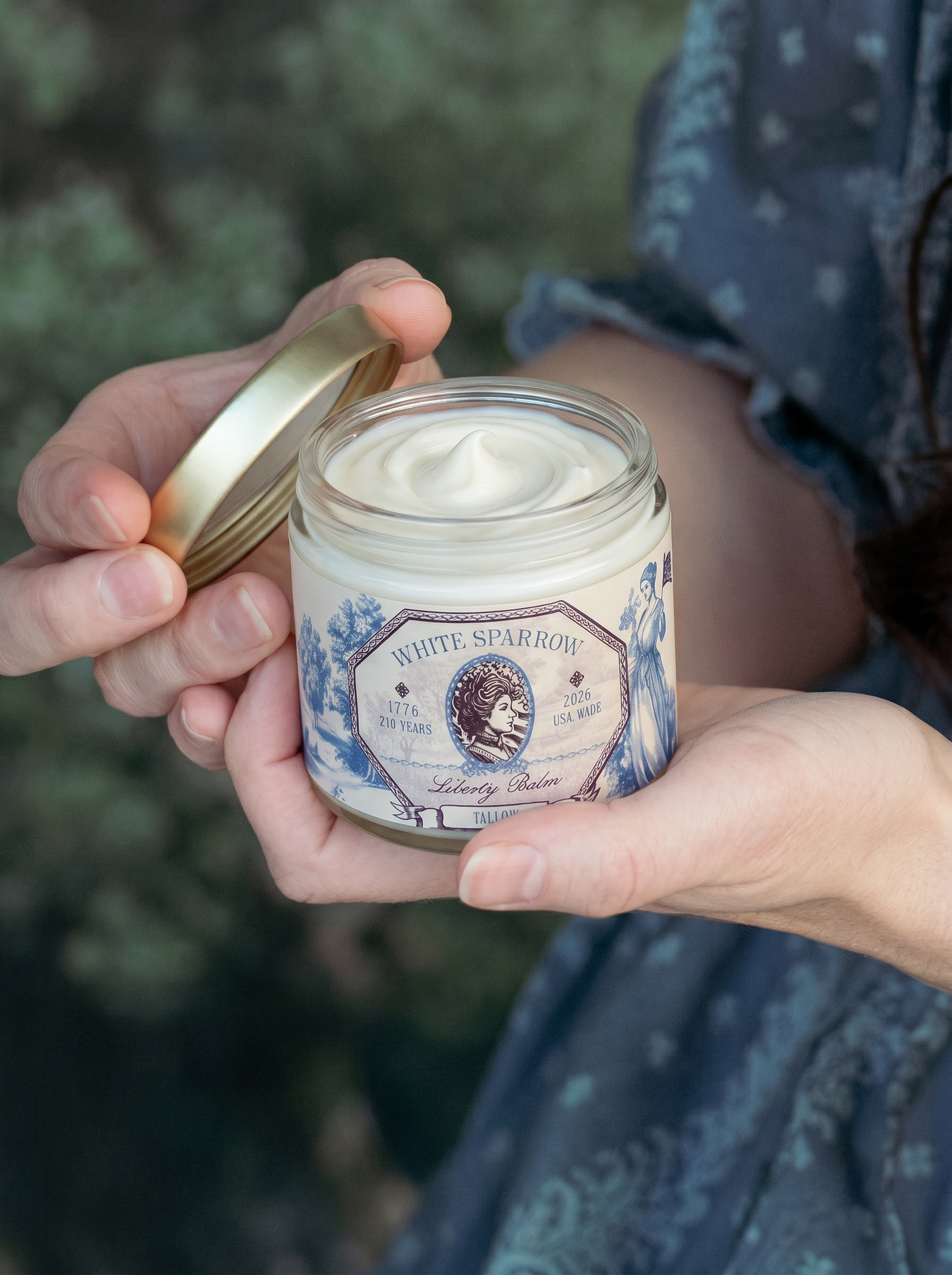
Tallow is rendered beef fat. That's it. When sourced from 100% grass-fed, grass-finished cattle (like ours at White Sparrow Farmacy), it's a clean, nutrient-rich fat that's been used on skin for centuries.
Shea butter is extracted from the nut of the African shea tree. It's a plant-based fat that's been a staple in West African skincare for generations. It's widely available, generally well-tolerated, and works as a decent everyday moisturizer.
Both are natural. Both have a long history. Their differences show up in the chemistry.
The Fatty Acid Profiles
This is where things get interesting — and where tallow really stands out.
Your skin produces its own oil called sebum. Sebum is mostly made up of fatty acids like oleic acid, palmitic acid, and stearic acid. Your skin already knows these compounds. It absorbs them easily.
Tallow's fatty acid profile is remarkably close to sebum. It's high in oleic acid, palmitic acid, and stearic acid — the same building blocks your skin uses to keep itself hydrated and protected. That's not a coincidence. It's biology. Animal fat and human fat share a similar structure in a way that plant fats simply don't.
Shea butter is rich in oleic acid and stearic acid too, so it's not a bad match. But it also contains a high percentage of triterpenes, plus a significant fraction that doesn't absorb as readily. For many people, this means shea butter sits on top of the skin more than it sinks in.
How Each One Absorbs
This difference shows up in how each one feels on your skin.
Shea butter tends to feel creamy and rich going on. It provides a layer of moisture, but it can leave a slightly greasy or waxy film — especially if you use too much. Some people love that feeling. Others find it heavy.
Tallow absorbs more readily. Because its fatty acids so closely match your skin's natural oils, it tends to sink in rather than sit on the surface. You get the moisture without as much residue. Many people describe it as feeling "skin-like" — nourishing, but not greasy.
Vitamins and Nutrients
Both options bring vitamins to the table. Here's what's naturally present in each.
Tallow (grass-fed) contains Vitamin A (supports cell turnover and skin repair), Vitamin D (plays a role in skin barrier function), Vitamin E (a natural antioxidant that protects skin), Vitamin K (supports skin healing), and CLA (conjugated linoleic acid — an anti-inflammatory fatty acid found almost exclusively in grass-fed animals).
Grass-fed matters here. Tallow from grain-fed cattle has a lower nutrient profile. The vitamins and CLA content are meaningfully higher when the animal eats what it's supposed to eat.
Shea butter contains Vitamin A (in smaller amounts than tallow), Vitamin E (similar antioxidant properties), and Vitamin F (a combination of essential fatty acids). Shea butter's vitamin content is real and worth noting. But grass-fed tallow tends to carry a broader and more concentrated range of fat-soluble vitamins.
Biocompatibility: Why It Matters for Sensitive Skin
Biocompatibility means how well a substance works with your body's biology. For skin, it means how easily the skin can recognize and use what you're putting on it.
Tallow scores high here. Because it so closely mirrors the fats your skin already produces, it tends to be well-tolerated — even by people with reactive or sensitive skin. Many people with eczema, rosacea, or chronic dryness find that their skin responds better to tallow than to any plant-based option they've tried. Learn more about why tallow works so well for skin here.
Shea butter is generally considered non-comedogenic and gentle, and most people tolerate it well. But for a subset of people — especially those with latex allergies or tree nut sensitivities — shea butter can cause irritation or breakouts. If your skin is sensitive, tallow is worth trying for this reason alone.
Texture, Scent, and Everyday Use
Texture: Shea butter at room temperature is soft and creamy, almost like thick lotion. It spreads easily and feels luxurious coming out of the jar. Tallow balm has a firmer texture — more like a solid balm — that softens quickly with body heat. A little goes a long way with both.
Scent: Raw shea butter has a mild, nutty smell that most people don't mind. Refined shea butter is often odorless. Tallow, when properly rendered, has a very mild, neutral scent — not what most people expect when they hear "beef fat." At White Sparrow, our tallow balm is rendered in small batches specifically to keep that scent clean and faint.
Everyday use: Both work well as daily moisturizers. Shea butter is easier to find and comes in a wide range of products. Tallow balm is more concentrated, so you use less of it.
Shelf Life
Shea butter can go rancid within 12–24 months, especially if exposed to heat or sunlight. Tallow has a longer natural shelf life — often 1–2 years or more at room temperature, longer if refrigerated. Its saturated fat content makes it more stable than most plant oils. That's one reason it was used as a preservation and storage fat for centuries before refrigeration existed.
Side-by-Side: Tallow vs. Shea Butter
| Tallow (Grass-Fed) | Shea Butter | |
|---|---|---|
| Source | Grass-fed beef fat | African shea tree nut |
| Fatty acids | Oleic, palmitic, stearic — closely mirrors sebum | Oleic, stearic, plus triterpenes |
| Skin compatibility | Very high — mimics skin's natural oils | Good for most; some sensitivity in nut-allergic individuals |
| Vitamins | A, D, E, K, CLA | A, E, F |
| Absorption | Sinks in readily | Can sit on surface; may feel heavier |
| Texture | Firm balm, softens with touch | Soft, creamy |
| Scent | Mild to neutral | Mild nutty (raw) / neutral (refined) |
| Shelf life | 1–2+ years | 12–24 months |
| Best for | Dry, sensitive, eczema-prone skin | General daily moisturizing |
So Which One Is Better?
Shea butter is a solid, well-established moisturizer. If it works for you, there's no reason to ditch it.
But if you have very dry skin, sensitive skin, or skin that just hasn't responded the way you hoped to plant-based moisturizers — tallow is worth a serious look. The biocompatibility argument is real. Your skin is animal-based. Tallow is animal-based. The fit makes sense at a biological level.
The other thing to know: not all tallow is the same. Grass-fed, grass-finished tallow from American cattle carries more nutrients than conventional tallow. At White Sparrow Farmacy, our tallow balm starts with cattle raised in the American West on open pasture — no grain, no shortcuts. It's rendered by hand in small batches, the same way it would have been made a hundred years ago.
Ready to Try It?
If you've never tried tallow balm, or if you've been on the fence about switching from shea butter, we make it easy. Our tallow balm comes with a 30-day money-back guarantee. Try it. If your skin doesn't love it, we'll make it right — no questions asked.
Your skin deserves something that actually works with it, not just on it.
White Sparrow Farmacy is a small family brand rooted in Middleton, Idaho — a town with a general store that's been standing since 1884. We make tallow skincare in small batches because we believe simple ingredients, done right, are enough.