



Tallow Balm for Eczema: A Complete Natural Care Guide
If you live with eczema, you already know the frustration: an endless parade of creams that sting, stop working, or seem to make things worse. Somewhere along the way, more and more people are reaching past the pharmacy shelf for something their great-grandmothers would recognize, tallow. This is a complete, honest guide to using tallow balm for eczema-prone skin: why it can help, how to use it well, and where its limits are.
An important note up front: eczema is a medical condition, and this article is general education, not medical advice. If your eczema is severe, weeping, infected, or not improving, please see a doctor or dermatologist. Tallow is everyday barrier care, a gentle way to support the skin, not a replacement for medical treatment when you need it.
What eczema actually is (and why it matters here)
Eczema, most commonly atopic dermatitis, is, at its core, a skin barrier problem. Healthy skin has a protective outer layer that holds moisture in and keeps irritants out, a bit like a brick wall with mortar between the bricks. In eczema-prone skin, that mortar is weak. Moisture escapes too easily, the skin dries out, and irritants and allergens slip through more readily, triggering the redness, itching, and inflammation of a flare.
That's why the cornerstone of eczema care isn't chasing symptoms, it's repairing and supporting the barrier so less moisture escapes and fewer irritants get in. This is exactly the lens through which to understand whether a product like tallow can help.
Why tallow suits eczema-prone skin
Three qualities make well-made tallow a natural fit for a compromised barrier.
1. It's remarkably like your skin's own oils
Tallow's fatty-acid profile closely mirrors human sebum. That similarity means skin tends to accept and absorb it rather than reject it, and it helps replenish the very kind of lipids a weak barrier is short on. You're essentially giving damaged skin building materials it recognizes.
2. It seals in moisture
Because tallow is a rich, occlusive fat, it forms a soft, breathable layer that slows the water loss driving eczema dryness. Applied to slightly damp skin, it traps hydration where it belongs, one of the single most useful things you can do for an eczema-prone barrier.
3. There's almost nothing in it to react to
This is huge for eczema. Many conventional eczema creams contain fragrances, harsh preservatives, emulsifiers, and other additives, and those extras are frequently what irritates sensitive skin. A clean tallow balm is just a few recognizable ingredients. Fewer ingredients means fewer potential triggers.
The vitamins in grass-fed tallow
Grass-fed tallow naturally carries the fat-soluble vitamins A, D, E, and K, nutrients that support skin repair and barrier function, delivered in a form skin knows how to use. Vitamin A supports healthy cell turnover; vitamin D plays a role in barrier function; vitamin E is a natural antioxidant that also helps keep the balm stable without synthetic preservatives. You're not adding lab-made actives that can sting reactive skin; you're offering nutrients in their natural context.
How to use tallow balm for eczema, step by step
Technique matters as much as the product. Here's how to get the most from tallow on eczema-prone skin.
- Bathe or shower gently. Keep water warm, not hot, and short. Hot, long soaks strip the barrier further. Use a mild, fragrance-free cleanser only where you need it.
- Pat dry, don't rub. Leave skin slightly damp. Rubbing irritates already-fragile skin.
- Apply within three minutes. This "soak and seal" window is key: applying balm to damp skin locks in the water you just added.
- Warm the balm first. Scoop a small amount and rub it between your fingers until it melts. This helps it spread smoothly without dragging.
- Press, then smooth. Press the melted balm gently into flare-prone areas rather than rubbing hard. Focus on the usual trouble spots, inner elbows, backs of knees, hands, cheeks.
- Reapply as needed. Eczema-prone skin often needs moisture more than once a day, especially after hand-washing. Keep a small jar handy.
Choose fragrance-free, always
For eczema, this isn't optional. Even natural essential oils can be too much for very reactive skin during a flare. Reach for a completely unscented tallow balm. Once your skin is calm and you know how it responds, you can decide whether a lightly scented option works for you on unaffected areas, but the default for eczema is no added fragrance.
What to avoid alongside tallow
Great barrier care is as much about removing triggers as adding good products. While you use tallow, it helps to:
- Cut harsh, foaming cleansers. That squeaky-clean feeling is stripped skin. Switch to something gentle and fragrance-free.
- Skip synthetic fragrance in soaps, lotions, and laundry detergent, a common hidden eczema trigger.
- Avoid over-exfoliating. Scrubs and acids wear down an already-weak barrier. Less is more.
- Watch for personal triggers, certain fabrics (wool against skin), heat and sweat, stress, and specific allergens. Everyone's list is different; keeping a simple diary can reveal yours.
What tallow can and can't do
It's worth being clear-eyed. Tallow is excellent barrier support: it moisturizes, seals, and gives skin lipids and vitamins it recognizes, with very little to react to. For many people with mild to moderate eczema, a consistent gentle routine built around a clean tallow balm makes a real, comfortable difference.
What tallow is not is a medicine. It won't switch off the immune response behind a severe flare, treat an infection, or replace a prescription your doctor has given you for a bad patch. Think of it as the daily foundation that keeps skin comfortable and supported, the thing you use consistently to reduce how often and how badly you flare, while medical treatment handles the acute problems when they arise.
Is tallow safe for children's eczema?
Eczema is extremely common in babies and young children, and tallow's simplicity is part of why parents reach for it, cradle cap, dry patches, and irritation are common reasons. Because a clean tallow balm has so few ingredients, there's very little for a child's skin to process. That said, children's skin is delicate: patch test first, use a fragrance-free balm, and loop in your pediatrician, especially for widespread or persistent eczema. We cover this in more depth in our guide on whether tallow is safe for babies.
Building a simple eczema-friendly routine
You don't need ten products. A calm eczema routine is usually short:
- Cleanse gently once or twice a day with a mild, fragrance-free cleanser.
- Moisturize while damp with a fragrance-free tallow balm, using the soak-and-seal method.
- Reapply to hands and flare-prone areas through the day as needed.
- Protect from known triggers, gloves for wet work or cold, softer fabrics, gentle laundry detergent.
- Stay consistent. Barriers heal slowly. Give any routine two to four weeks of steady use before judging it.
The magic isn't any single product, it's a gentle, consistent routine that stops stripping the barrier and starts supporting it.
Understanding your personal eczema triggers
Barrier care with tallow works far better when you also reduce what is setting off your flares. Eczema triggers are individual, but they tend to fall into a few categories worth knowing.
Contact irritants
Synthetic fragrance is one of the most common, hiding in soaps, lotions, laundry detergent, and fabric softener. Harsh surfactants in foaming cleansers strip the barrier. Certain metals (like nickel in jewelry) and some preservatives also bother reactive skin. Switching to fragrance-free, gentle versions of everyday products removes a surprising amount of daily irritation.
Environmental triggers
Dry air (especially heated indoor air in winter), sudden temperature changes, heat and sweat, and hard water can all provoke flares. A humidifier in dry months, lukewarm rather than hot water, and rinsing off sweat promptly all help.
Fabric and friction
Rough fabrics, especially wool worn directly against skin, and tight or synthetic clothing that traps heat and sweat, are common aggravators. Soft, breathable natural fibers like cotton are gentler on eczema-prone skin, which is one reason many people with sensitive skin gravitate toward natural-fiber clothing and sleepwear.
Internal and lifestyle factors
Stress is a well-documented eczema trigger, as are, for some people, certain foods and seasonal allergens. You will not control all of these, but noticing your own patterns, perhaps with a simple flare diary, helps you anticipate and soften them.
The soak-and-seal method, explained in depth
This deserves its own section because it is the technique that makes the biggest difference for eczema-prone skin, and most people do not do it correctly.
The principle is simple: add water to the skin, then trap it before it escapes. Eczema-prone skin loses water rapidly, so the goal is to lock in hydration at the moment the skin is holding the most. That means bathing or showering in lukewarm (not hot) water, then applying your balm within about three minutes of getting out, while the skin is still slightly damp. Pat, do not rub, and do not fully dry off. The thin layer of surface water gets sealed under the tallow, giving the barrier a sustained supply of moisture to work with.
Done consistently, soak-and-seal can meaningfully reduce dryness and flaring. Done wrong, moisturizing bone-dry skin hours after a hot shower, you lose most of the benefit. If you take one technique from this guide, make it this one.
How consistency changes everything with eczema
Eczema care is a marathon, not a sprint, and this is where many people go wrong. They try a new balm, use it sporadically for a few days, do not see a miracle, and move on. But barrier repair is slow and cumulative. The barrier rebuilds over weeks, and the benefit of good care compounds: skin that is consistently supported flares less often and less severely over time, while skin that is only cared for during a flare stays stuck in a cycle of damage and repair.
The most effective approach is daily, boring, consistent barrier care whether or not you are flaring, so the barrier stays as strong as possible between flares. Think of it like brushing your teeth: you do not wait for a cavity. A simple routine you can actually keep up every day beats an elaborate one you abandon after a week.
When to see a doctor
Because eczema is a medical condition, it is worth being clear about the signs that mean it is time for professional help rather than more balm. See a doctor or dermatologist if your eczema is severe or covers large areas, if it is weeping, crusting, or shows signs of infection (increasing redness, warmth, pus, or fever), if it is not improving with gentle care, if the itch is disrupting sleep or daily life, or if you are unsure what you are dealing with. Prescription treatments exist for good reason, and using them during a bad flare is not a failure. Tallow's role is the gentle daily foundation that supports your skin between and alongside medical care, not a replacement for it.
Frequently asked questions about tallow and eczema
Can tallow cure eczema?
No, and it is important to be clear about that. Eczema is a chronic inflammatory condition with genetic and immune components, and nothing you apply topically will cure it. What a good barrier balm can do is support the skin's compromised barrier, lock in moisture, and ease the dryness and tightness that make flares so uncomfortable. Think of tallow as everyday barrier support, not a treatment, and keep your prescribed medications for the flares that need them.
Is tallow safe to use with prescription eczema creams?
Many people use a plain moisturizer alongside topical steroids or other prescribed treatments, since keeping the skin well hydrated is a cornerstone of eczema care. The usual guidance is to apply the medication first, let it absorb, and then seal with a moisturizer, but ordering and timing can vary by prescription. Because eczema treatment is individual, run any new product past your dermatologist first.
When should I apply tallow for the best effect?
The most effective moment is right after bathing, within a few minutes, while the skin is still slightly damp. Warm (not hot) water, a gentle cleanser, a soft pat dry, and then a thin layer of balm traps that moisture against the skin. Reapply through the day whenever skin feels tight or dry, especially in cold or low-humidity conditions.
Could tallow make my eczema worse?
Any product can potentially irritate reactive skin, which is why a patch test on a small area over 24 hours is essential before wider use. If you notice increased redness, itching, or stinging, stop and check with your doctor. A fragrance-free, single-ingredient balm removes many of the common triggers, but no product is right for everyone.
How often can I reapply?
As often as your skin needs it. Unlike medicated products, a simple barrier balm has no daily limit, so reapplying to dry, tight areas throughout the day is fine and often helpful during a flare.
Is tallow better than a drugstore eczema cream?
Better is the wrong frame; different is closer. Many drugstore creams are formulated with barrier lipids and humectants and work well for a lot of people. Tallow appeals to those who prefer a simple, single-ingredient, fragrance-free option and whose skin responds to it. The best moisturizer for eczema is ultimately the one your skin tolerates and that you will actually use every day, whether that is a clinical cream or a clean balm.
Can adults and children both use it?
Adults with eczema use tallow balm freely once they know their skin tolerates it. For children, and especially babies, the same caution applies as with any product: patch test and check with a pediatrician first, since young skin is thinner and more reactive.
How often should I apply tallow balm for eczema?
At least once daily on slightly damp skin after bathing, and reapplied to hands and flare-prone areas as needed. Eczema-prone skin often benefits from moisturizing more than once a day.
Should I use scented or unscented tallow for eczema?
Unscented. Even natural fragrances can irritate reactive, flare-prone skin. Choose a completely fragrance-free balm.
Can tallow replace my prescription eczema cream?
No. Tallow is daily barrier care that can reduce how often and how badly you flare, but it doesn't replace medical treatment for active or severe eczema. Keep using what your doctor prescribes for flares.
How long before I see a difference?
Skin barriers repair slowly. Give a consistent, gentle routine two to four weeks of steady use before judging results.
How White Sparrow makes tallow for sensitive, eczema-prone skin
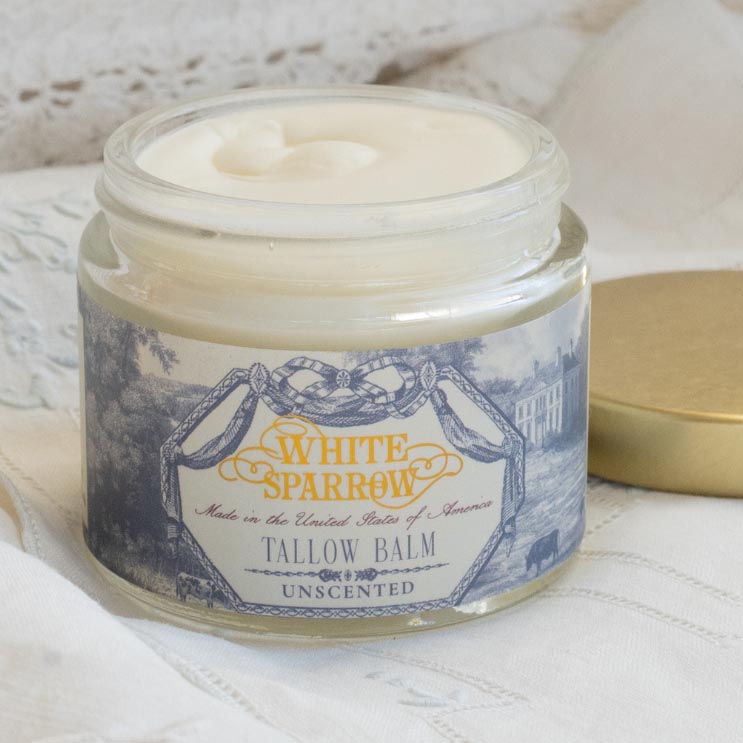
Our tallow balm is built for exactly this kind of skin: 100% grass-fed, grass-finished tallow, hand-rendered in small batches, with a short ingredient list and a completely unscented option. For eczema, start with the unscented balm, apply it to slightly damp skin after a warm (not hot) shower, and keep a small jar by the sink for hands.
Every jar comes with a 30-day money-back guarantee. Barrier repair is personal, and we'd rather you find out on your own skin, risk-free, whether tallow helps.
→ Shop our unscented tallow balm
→ Related: How to calm eczema-prone skin naturally
White Sparrow Farmacy hand-renders grass-fed tallow skincare in small batches in Middleton, Idaho. This article is general education, not medical advice. For severe, weeping, infected, or worsening eczema, please see a doctor.