



A Natural Skincare Routine for Dry Skin (Step-by-Step)
Dry skin does not need a ten-step routine or a shelf full of expensive serums. In fact, complicated routines often make dry skin worse, because every extra product is another chance to strip or irritate. What dry skin actually needs is a short, gentle, natural routine that stops removing moisture and starts restoring it. Here is exactly that, step by step.
First, why is your skin dry?
Dry skin happens when the skin barrier, the protective outer layer, cannot hold onto enough moisture. Water escapes too easily, and skin feels tight, flaky, rough, or itchy. Several things weaken that barrier: harsh cleansers, hot water, over-exfoliating, dry indoor air, cold weather, and simply producing less natural oil (which happens with age). The good news is that a gentle routine can reverse most of this by protecting the barrier instead of assaulting it.
The core principle: stop stripping, start sealing
Before the steps, hold onto this one idea. Most dry-skin damage comes from products and habits that strip the skin: foaming cleansers, harsh acids, hot showers, and rough scrubbing. The fix is twofold: remove the stripping, and add gentle moisture that seals. Everything below follows from that.
The routine, step by step
Step 1: Cleanse gently (morning and night, or just night)
Swap any harsh, foaming, or squeaky-clean cleanser for a mild, fragrance-free one. That tight, squeaky feeling after washing is a sign your barrier has been stripped, not a sign of cleanliness. If your skin is very dry, you may only need to cleanse at night and simply rinse with lukewarm water in the morning. Always use lukewarm, never hot, water, and pat your face dry rather than rubbing.
Step 2: Leave skin slightly damp
This small step makes a big difference. Do not dry your face completely. Damp skin holds a bit of surface water, and the next step traps it in, which is far more effective than applying moisturizer to bone-dry skin.
Step 3: Nourish and seal with a tallow balm
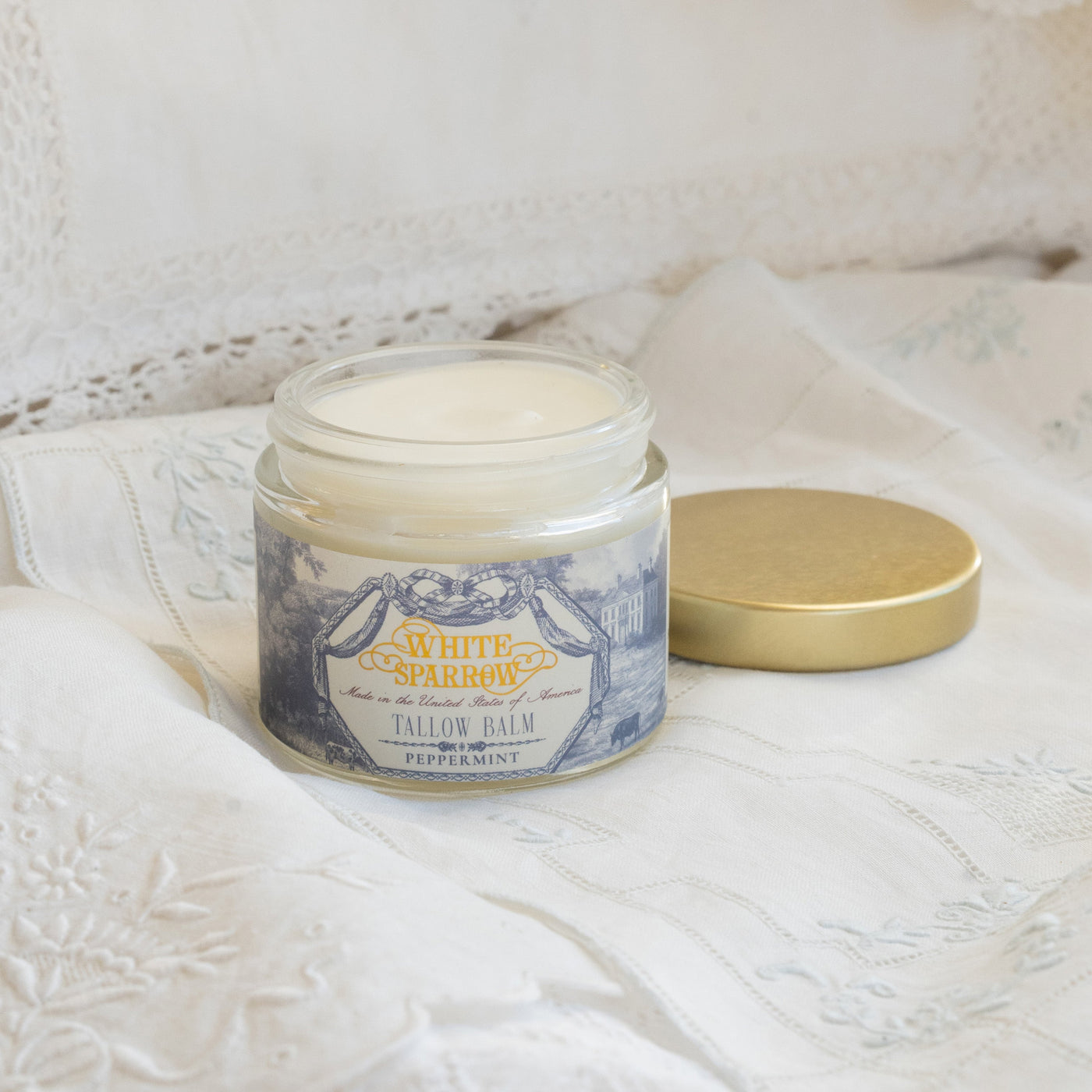
This is the heart of a natural dry-skin routine. While skin is still slightly damp, warm a pea-sized amount of grass-fed tallow balm between your fingers and press it in. Tallow is ideal for dry skin for three reasons: it closely mirrors your skin's own oils so it absorbs cleanly, it is a rich fat that seals in the moisture you just added, and grass-fed tallow carries natural vitamins A, D, E, and K that support barrier repair. A single, well-chosen balm does the job of a serum, a moisturizer, and a barrier cream.
Step 4: Protect the delicate spots
Lips, under-eyes, and the corners of the nose dry out first. Press a tiny extra amount of balm into these areas. If your hands are dry too, keep a small jar by the sink and reapply after washing.
Step 5: In the morning, add sun sense
Natural care pairs best with sun protection. After your morning moisture, add shade, a hat, and a mineral sunscreen when you will be outdoors for a while. Sun exposure worsens dryness and damage over time, so this step protects all your other efforts.
Weekly and environmental habits that help dry skin
A routine is only part of the picture. These habits protect the barrier between applications:
- Shorten and cool your showers. Hot, long showers strip natural oils. Keep them warm and brief, and moisturize within a few minutes of getting out.
- Use a humidifier in dry seasons or heated rooms to put moisture back into the air.
- Go easy on exfoliation. Dry skin rarely needs frequent scrubs or acids. Once a week at most, and gently, if at all.
- Skip synthetic fragrance in skincare and laundry, a common irritant for dry, sensitive skin.
- Drink water and eat healthy fats. Hydration and dietary fats support skin from the inside, complementing what you do on top.
What to avoid if you have dry skin
- Foaming, sulfate-heavy cleansers that leave skin tight.
- Alcohol-heavy toners that strip and sting.
- Frequent acids and scrubs that wear down an already-fragile barrier.
- Water-only "moisturizers" that evaporate and leave skin drier.
- Hot water, your barrier's quiet enemy.
A sample dry-skin routine at a glance
| Time | Step |
|---|---|
| Morning | Rinse with lukewarm water (or gentle cleanse), leave damp, press in a small amount of tallow balm, add sun protection. |
| Evening | Gentle fragrance-free cleanse, leave damp, press in a pea-sized amount of tallow balm, dab extra on lips and dry spots. |
| Through the day | Reapply balm to hands after washing; keep a jar handy. |
| Weekly | Gentle exfoliation only if needed; run a humidifier in dry weather. |
How long until dry skin improves?
Many people feel a difference in comfort right away, because sealing in moisture is immediate. Real barrier repair, though, takes time. Give a consistent gentle routine two to four weeks before judging it. The trend is what matters: less tightness, less flaking, and calmer skin over the weeks.
Dry skin vs. dehydrated skin: know the difference
People use "dry" and "dehydrated" interchangeably, but they are not the same, and the distinction changes how you care for your skin. Dry skin is a skin type: it lacks oil, because it naturally produces less sebum. It tends to feel tight and flaky all over and benefits most from rich, nourishing, oil-based moisture like tallow. Dehydrated skin is a temporary condition: it lacks water, and even oily skin can be dehydrated. It can look dull and feel tight while still being shiny in places.
The good news is that a gentle routine helps both, but knowing which you have refines your approach. Truly dry skin wants the richness of a fat like tallow to make up for missing oil. Dehydrated skin especially benefits from the soak-and-seal method that traps water in. Most people with chronic dryness have some of both, which is exactly why the routine here, add water, then seal it with a nourishing balm, works so well.
Seasonal adjustments for dry skin
Dry skin is rarely constant; it flares with the seasons, and adjusting your routine accordingly makes a real difference.
Winter
Cold air holds less moisture and indoor heating dries the air further, so winter is peak dry-skin season. Apply your balm more generously, run a humidifier, keep showers cooler and shorter, and reapply to hands, which take a beating from cold and frequent washing.
Summer
Heat, sun, air conditioning, and chlorine or salt water can all dry skin in summer. Rinse off chlorine and salt promptly, moisturize after sun exposure, and do not skip sun protection, which prevents the damage that worsens dryness.
Transitional seasons
Spring and autumn bring fluctuating humidity that can leave skin confused. Pay attention and adjust: more balm on dry, windy days; a lighter touch when the air is humid.
Letting your routine flex with the weather, rather than doing the exact same thing year-round, keeps dry skin comfortable through every season.
Lifestyle factors that dry out your skin
Skincare products are only part of the picture. Several everyday habits quietly dry skin from the outside and inside, and adjusting them amplifies everything your routine is doing.
- Long, hot showers and baths. The most common culprit. Heat and prolonged water exposure strip natural oils. Keep it warm and brief.
- Indoor heating and air conditioning. Both pull moisture from the air and your skin. A humidifier helps enormously.
- Harsh soaps and hand sanitizer. Frequent use, especially on hands, is deeply drying. Choose gentle, moisturizing cleansers and reapply balm after.
- Low water intake and low healthy-fat diet. Skin is supported from within; hydration and dietary fats like those in fish, nuts, and olive oil help.
- Wind and sun exposure. Both dry and damage skin. Protect with clothing, shade, and sunscreen.
You do not have to fix all of these at once. Even trimming your shower temperature and adding a humidifier can noticeably change how your skin feels.
Why less really is more for dry skin
It is tempting, when your skin is dry and uncomfortable, to throw more products at it. This usually backfires. Every additional cleanser, toner, acid, or scrub is another opportunity to strip the barrier and irritate already-fragile skin. Many people trapped in a cycle of chronic dryness are, without realizing it, over-treating their skin into that state.
The most effective dry-skin routines are almost boringly simple: a gentle cleanser, a rich sealing moisturizer applied to damp skin, and sun protection. That is genuinely enough for most people. When you strip your routine back to those essentials and give your barrier a chance to recover, dry skin very often calms down on its own. Simplicity is not a compromise here; it is the strategy.
A simple morning and evening routine for dry skin
You do not need ten steps to care for dry skin; you need the right few, done consistently. In the morning, cleanse gently or simply rinse with lukewarm water to avoid stripping oils overnight skin worked to build. Follow with a hydrating layer while the skin is still damp, then seal it with a thin layer of a rich balm, and finish with sunscreen, which protects the barrier as much as it guards against aging. In the evening, cleanse to remove the day, again with a mild, non-foaming product, then apply your balm a little more generously to slightly damp skin so it works overnight. That is the whole routine. The magic is not in the number of products but in two habits: never cleansing with hot water or harsh foaming washes, and always sealing damp skin rather than letting it air-dry. Do those two things daily and dry skin improves more than any elaborate regimen would deliver.
Common mistakes that make dry skin worse
Sometimes the fastest way to help dry skin is to stop doing the things that hurt it. Hot showers feel wonderful but strip the protective oils that dry skin can least afford to lose, so lukewarm is kinder. Over-cleansing and harsh, foaming cleansers do the same, leaving skin tight and squeaky in a way that signals damage rather than cleanliness. Over-exfoliating is a frequent culprit; scrubbing or acid-heavy routines strip an already fragile barrier, and once or twice a week of gentle exfoliation is plenty. Applying moisturizer to bone-dry skin wastes much of its benefit, since the best time is within a couple of minutes of washing while skin still holds water. Skipping moisturizer in winter, or indoors where heating dries the air, lets the barrier degrade. And forgetting that hydration comes from the inside too, drinking enough water and using a humidifier in dry rooms, leaves the skin fighting an uphill battle. Fix these, and the products you do use finally get a chance to work.
Frequently asked questions about caring for dry skin
Why is my skin dry even when I moisturize?
Often it comes down to timing and technique. Moisturizer applied to fully dry skin, or without an occlusive layer to seal it, loses much of its effect, especially in low humidity. Applying to damp skin and sealing with a richer balm usually solves it. Persistent dryness despite good habits can also signal dehydration, a compromised barrier, or an underlying condition worth discussing with a professional.
How often should I exfoliate dry skin?
Sparingly. Once or twice a week with a gentle method is enough for most dry skin. More than that risks stripping an already fragile barrier and making flaking worse, not better.
Is drinking water enough to fix dry skin?
Hydration from within helps, but it is not a complete answer. Water supports overall skin health, yet dry skin is largely a barrier issue, so topical moisturizing and sealing still matter. Think of internal hydration and a good routine as partners rather than substitutes.
Should I use a humidifier?
In dry climates and heated indoor air, a humidifier can make a real difference by putting moisture back into the environment your skin sits in all day. It is one of the simplest upgrades for stubborn winter dryness.
What natural ingredients are best for dry skin?
Rich, sealing fats and butters tend to serve dry skin best, since the core problem is a barrier that loses water too easily. Tallow, shea butter, and heavier plant oils all help lock in moisture, while gentler humectants like honey and glycerin draw water into the skin. The most effective natural routine usually pairs something that adds water with something that seals it in, rather than relying on either alone.
Can diet affect how dry my skin is?
It can play a supporting role. Adequate healthy fats, staying well hydrated, and a balanced diet all contribute to skin health from the inside, though they will not override a poor topical routine or an underlying condition. Treat diet as one helpful factor among several, not a standalone fix.
Is dry skin permanent?
For most people it is manageable rather than permanent. Simple habits, gentle cleansing, sealing damp skin, protecting against harsh weather, dramatically improve everyday dryness. Some people are naturally more prone to it or have conditions that require ongoing care, but even then the right routine keeps it comfortable.
Should my routine change with the seasons?
Yes. Skin usually needs richer, more occlusive care in cold, dry winter months and can tolerate lighter layers in humid summer weather. Adjusting the weight of your moisturizer with the seasons keeps dry skin balanced year-round.
What is the best natural skincare routine for dry skin?
A short one: gently cleanse with a fragrance-free cleanser, leave skin slightly damp, then press in a grass-fed tallow balm to nourish and seal, with extra on lips and dry spots and sun protection during the day. Avoid harsh cleansers, hot water, and over-exfoliating.
Why does my skin get drier when I use more products?
Because many products strip the barrier. Foaming cleansers, acids, and alcohol-based toners remove natural oils, so more products often mean more dryness. A shorter, gentler routine usually works better.
Should I moisturize on damp or dry skin?
Damp. Applying a sealing balm to slightly damp skin traps the surface water and is far more effective than moisturizing bone-dry skin.
Is tallow good for dry skin?
Very. It mirrors your skin's own oils, seals in moisture, and carries barrier-supporting vitamins, so results last longer than a typical water-based lotion.
How often should I moisturize dry skin?
At least morning and night, plus reapplying to hands and dry areas as needed through the day.
How White Sparrow fits into a dry-skin routine
Our grass-fed tallow balm is built to be the nourish-and-seal step in a simple natural routine: 100 percent grass-fed, grass-finished tallow, hand-rendered in small batches, with a short ingredient list and a fully unscented option for sensitive skin. Apply it to slightly damp skin morning and night, and let the routine do the rest. Every jar comes with a 30-day money-back guarantee.
→ Shop our grass-fed tallow balm
→ Related: The only skincare routine your skin actually needs
White Sparrow Farmacy hand-renders grass-fed tallow skincare in small batches at a general store built by our pioneer relatives in 1884 in Middleton, Idaho.